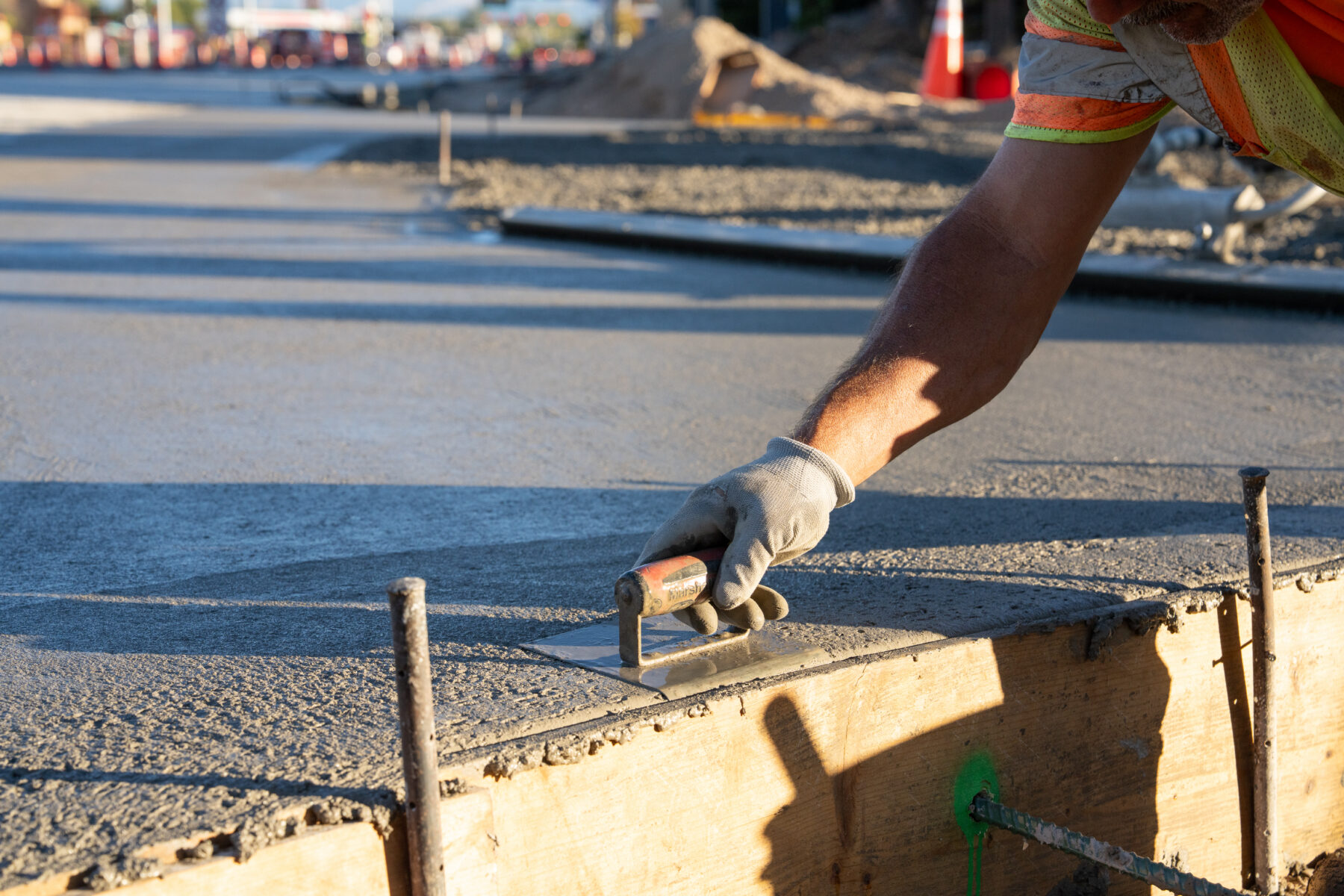

How Permeable Concrete Is Helping Manage Stormwater on Commercial Properties
August 4, 2026
Permeable concrete lets water pass straight through the pavement and into the ground below, instead of sheeting across the surface toward a drain. On commercial properties across Colorado’s western slope, that means less pooling, less strain on storm systems, and lots that stay usable through the wettest weeks of the year. From a practical standpoint, it’s a strong fit for parking lots, loading areas, and low-traffic lanes, and it depends on the mix, the base, and a bit of seasonal upkeep.
What Permeable Concrete Is
A single size of crushed stone, coated with just enough paste to bond one particle to the next, is what separates permeable concrete from a standard mix, leaving open voids that run the entire depth of the slab. The stone carries the load, not the paste. Those voids typically make up between one-sixth and one-quarter of the slab’s volume. Structural capacity runs lower as a result, typically 500 to 2,500 psi depending on the blend, suited to parking areas and walkways rather than heavy-truck lanes.
Batch control matters more with this mix. A modest excess of paste is enough to close off pore space and pull the slab back toward conventional concrete. Crushed stone in the three-eighths to three-quarter inch range holds its shape under compaction without breaking down into fines that clog the voids years later. For a ready-mix plant, that consistency earns a permeable job over concrete mixed on site.
How Permeable Concrete Controls Stormwater
Rain landing on a permeable surface drops straight through the open voids instead of sheeting across the top. It enters a stone base layer beneath the slab first. That base course, built from open-graded stone with its own high void content, acts as a temporary reservoir, releasing water into the subgrade at a rate the native soil can absorb. Where subgrade soil drains slowly, an underdrain in that stone layer releases the stored water to a municipal system on a delay instead of all at once.
Slope beneath a permeable installation matters as much as the mix itself. A base layer set on compacted subgrade, pitched correctly, keeps stored water moving toward the discharge point instead of settling toward a building foundation or property line. That’s why site engineers pair a soil test with the pavement design early: the native infiltration rate determines how much stone base a project needs and whether an underdrain becomes part of the plan.
Placing and Curing Permeable Concrete
Compaction on a permeable pour uses a steel roller instead of the vibrating screeds and floats that would push paste to the surface and seal the voids shut. A single pass immediately after strike-off locks the aggregate structure in place while leaving the pore network intact. Edge forms go in ahead of the pour, because a near-zero slump mix will not settle or self-level. Grade and thickness have to be set before the truck arrives.
Because the exposed surface area gives water more paths to escape, a permeable slab loses moisture faster than a standard pour. Crews cover a finished section with plastic sheeting within minutes of compaction and keep it sealed for roughly a week. Standard wet curing would drain straight through the open pores, so plastic sheeting does the job instead. On the western slope, where afternoon humidity drops fast after a morning storm, that covered curing period keeps hydration moving through the slab.
Where Permeable Concrete Works Best on Commercial Sites
Permeable concrete fits well on commercial lots across the western slope, where two seasonal patterns put real demand on drainage. Summer storms across Mesa County tend to arrive as short, intense thunderstorms that drop a significant volume of water on pavement in under an hour. Spring snowmelt off Grand Mesa and the San Juan range adds a second surge that standard pavement routes straight to the nearest storm drain. Both patterns can hit the same lot in the same year. Commercial properties in Grand Junction, Montrose, and the Telluride, Ridgway, and Norwood corridor deal with both, which makes on-site infiltration practical here.
Parking stalls, loading areas, and low-traffic drive lanes are where permeable concrete matters most on a commercial site. These lots see light, steady traffic. Those surfaces carry enough vehicle weight to justify a structural slab, without the heavy-truck loading that calls for a denser mix. Site plans that pair a permeable lot with storm drainage and grading handled by the same crew let a single team carry a stormwater plan from design through the finished surface.
How to Maintain a Permeable Concrete Surface
Fine sediment tracked onto a permeable lot from gravel roads or landscaping beds settles into the surface voids over years of traffic. That buildup narrows the pathways water needs to pass through. A vacuum sweeper run on a seasonal schedule, ideally before spring runoff and again after the peak of monsoon season, pulls that sediment out of the pores before it packs down. Pressure washing handles isolated spots where oil or silt has bonded to the surface, best used as a supplement to sweeping rather than a replacement for it.
If you notice water standing on a permeable lot, that’s usually a sign the surface is due for a sweep. Catching it early keeps the lot infiltrating for years rather than months.
A Stormwater Plan That Starts With the Slab
Permeable concrete gives a commercial property a way to manage stormwater at the surface instead of routing every drop to pipes, ponds, and pumps elsewhere on site. Mix design, base preparation, and curing each play a part. Every step done right during placement keeps a surface infiltrating water for years rather than months.
Across Grand Junction and the western slope, United Companies works with commercial developers to match a permeable concrete mix and site plan to the property, from design through the finished pour. Request a quote to talk through what a permeable surface could handle on your next commercial project.