
How Concrete Mix Designs Are Engineered for Strength, Durability, and Performance
September 2, 2026
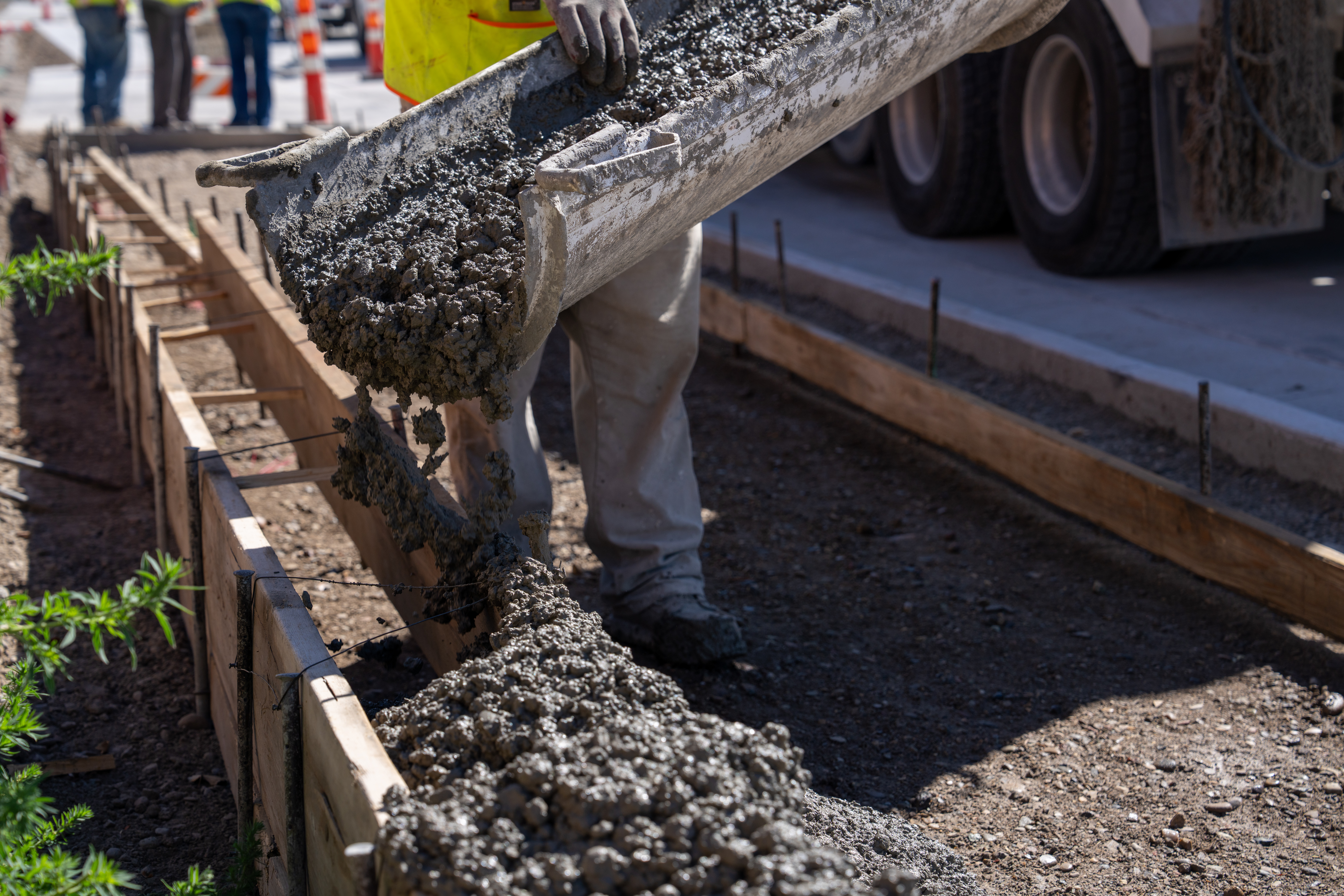
A concrete mix design is the blueprint behind every yard of ready-mix concrete that leaves the plant, and getting it right is what separates a slab that holds for decades from one that only looked solid at the pour. The design sets what a batch needs to become once it reaches the job, matched to the load it will carry and the ground it will sit on. Around Grand Junction, sites range from flat valley pours to slabs set into rockier ground nearby, and the mix has to fit each one.
What Goes Into a Concrete Mix Design?
A mix design starts with four components: cement, aggregate, water, and, in most cases, one or more admixtures. Cement paste binds everything together as it hydrates. Aggregate carries most of the compressive load once the paste cures around it. Water triggers the reaction that turns cement powder into a hardened matrix.
Ready-mix concrete in this market gets batched with washed sand and crushed gravel from Telluride Gravel, United Companies’ own aggregate division, which fixes stone size and gradation before cement and water get added.
Admixtures fine-tune the reaction without changing the basic ratio. A water reducer cuts how much water a mix needs to stay workable. A retarder slows the set on a hot afternoon. Air-entraining agents fold microscopic bubbles into the paste, giving trapped moisture room to expand when it freezes. Sustainability standards also guide how much recycled aggregate a mix can carry without losing compressive capacity.
How Does the Water-Cement Ratio Set Strength?
The water-cement ratio drives more of a mix’s final strength than any other number in the design. A standard mix runs between 0.40 and 0.50, low enough to pack cement paste tightly around each aggregate particle and close off the pores that weaken concrete. Add water to make placement easier, and that extra water thins the paste and leaves pore space behind as it cures, dropping the finished PSI below the class ordered.
Slump makes the ratio visible on site. It measures how far a fresh sample settles under its own weight. A four-inch slump pours cleanly around rebar and anchor bolts, while screed work runs closer to three inches so the surface keeps its aggregate interlock through finishing. Water added at the job to loosen a stiff load changes that ratio, and it is one of the most common reasons a pour falls short of its own ticket.
How Does Elevation Change a Concrete Mix Design?
The water-cement ratio does not hold constant across every site. United Companies delivers across 16 counties, from the high desert valley near Grand Junction into mountain towns such as Ridgway, Naturita, Nucla, and Telluride, which sits near 8,750 feet. That range shifts curing conditions as much as the scenery. Thinner air and colder nights at altitude slow the hydration that builds early strength, while the valley floor holds summer heat late into the evening.
Slabs across the colder, higher parts of the territory get air entrainment near 5 to 6 percent, giving trapped water room to expand through repeated freeze-thaw cycles instead of cracking the surrounding paste. Batch plants serving the mountain corridor around Ouray and San Miguel counties adjust set time and water content for cooler placement. Summer pours near Grand Junction call for the opposite: cooler batch water and, on the hottest afternoons, a retarder that holds the set back long enough to finish the surface before it stiffens.
Aggregate choice feeds into the same durability goal, a point covered in more depth in the guide to how the right aggregate builds longer-lasting roads and foundations.
How Is a Concrete Mix Design Confirmed Through Testing?
Elevation and climate adjustments only matter if a plant hits them load after load. Batching systems that track cement, water, and admixture volumes on every batch keep a 4,000 PSI mix leaving the plant at eight in the morning matched to the one that leaves at three in the afternoon.
Fresh concrete gets sampled at delivery, cylinders get cast on site, and those samples cure and break under a hydraulic press at set intervals, usually 7 and 28 days, to confirm the batch reached its class. Projects calling for integral color follow the same logic, dosing pigment to the same tolerance as cement and water so a slab poured in one section matches a section poured weeks later. That consistency lets an engineer or contractor treat a PSI number as a reliable spec, not an estimate.
How Is a Concrete Mix Design Matched to the Job Site?
A mix design brings four things together at once: cement and aggregate proportions, the water-cement ratio, admixture selection, and batch verification. A mix built for a valley driveway near Grand Junction and one poured above 8,000 feet near Telluride can share the same PSI class while running different water content and air entrainment underneath. Matching those details to the site is the whole point of a mix design.
Before ordering, it helps to have three things ready: the load the concrete will carry, the site elevation and expected weather at the pour, and the finish or color the project calls for. Those inputs shape the design, and they are the difference between a slab that reaches its rated strength and one that only looked that way on the day it was placed.
United Companies works with contractors and project owners across its 16-county western Colorado service area to build a mix design suited to the pour, from a residential driveway to a commercial foundation. Request a quote to put a mix design behind the next pour.
Frequently Asked Questions
What is a concrete mix design?
A concrete mix design is the specific recipe of cement, aggregate, water, and admixtures used to produce a batch of concrete. It sets the proportions needed to meet a required strength class and to hold up to the load, site, and climate where the concrete will be placed.
What is the ideal water-cement ratio for concrete?
Most standard mixes run a water-cement ratio between 0.40 and 0.50. A lower ratio packs cement paste tightly around the aggregate and produces higher compressive strength. Adding water on site raises the ratio, thins the paste, and can pull the finished PSI below the class that was ordered.
Why does concrete mix design change with elevation?
Higher elevations bring thinner air and colder nights that slow the hydration reaction responsible for early strength. Mixes for higher, colder sites often use air entrainment near 5 to 6 percent to resist freeze-thaw damage, while lower, hotter valley sites use cooler batch water and sometimes a retarder to control set time.
What does air entrainment do in concrete?
Air entrainment folds microscopic air bubbles into the cement paste. Those bubbles give trapped water room to expand when it freezes, which keeps repeated freeze-thaw cycles from cracking the concrete. It is commonly specified for slabs in colder, higher-elevation locations.
How is concrete strength tested?
Fresh concrete is sampled at delivery, and cylinders are cast on site. Those cylinders cure and then break under a hydraulic press at set intervals, typically 7 and 28 days, to confirm the batch reached its rated PSI class.
What is concrete slump and why does it matter?
Slump measures how far a fresh concrete sample settles under its own weight, showing how workable the mix is. A four-inch slump flows well around rebar and anchor bolts, while screed work often runs closer to three inches to hold aggregate interlock through finishing.