
How Concrete Batch Consistency Impacts Large Commercial and Infrastructure Projects
June 29, 2026
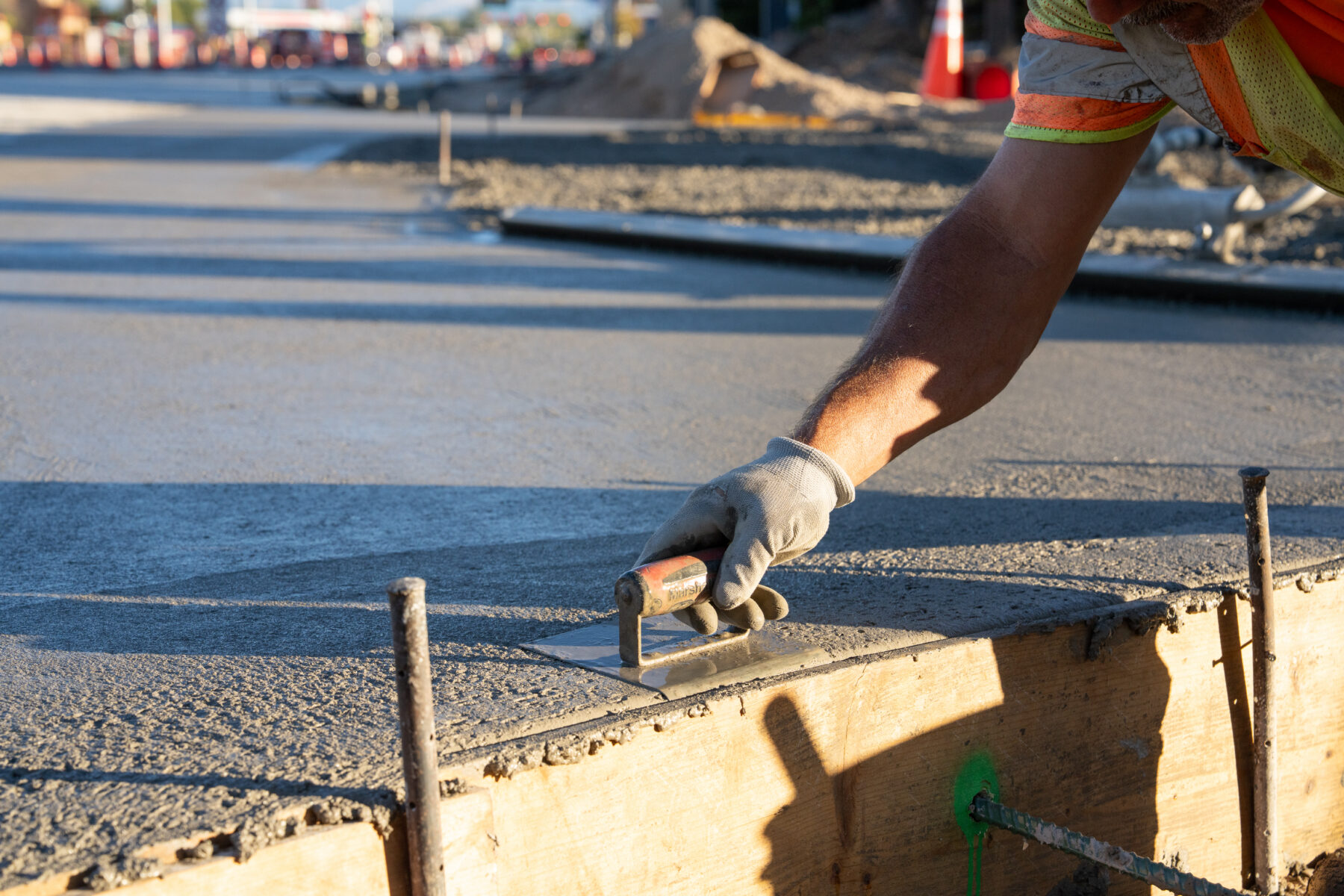
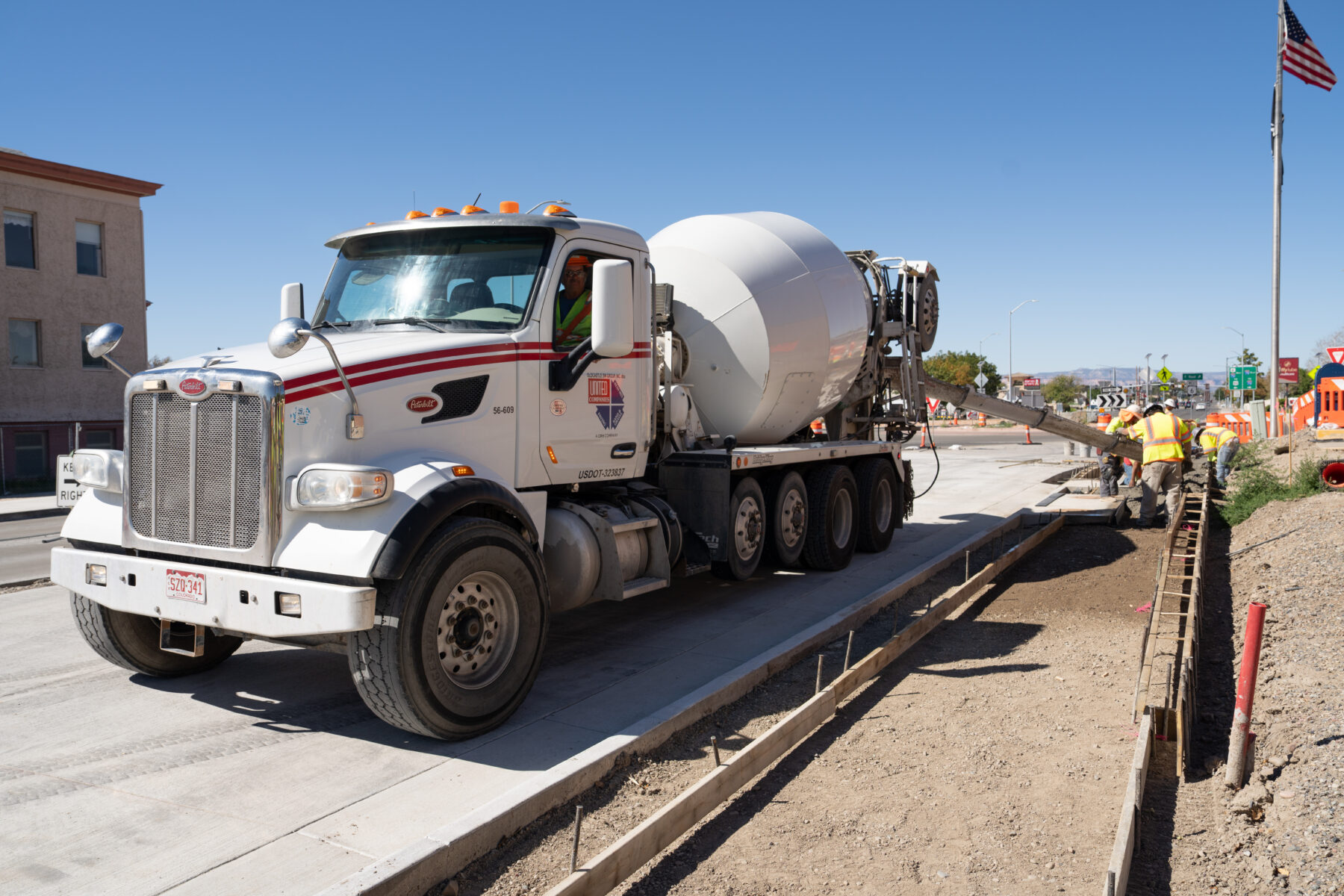 Large commercial and infrastructure pours depend on ready-mix concrete that performs consistently from one load to the next. When water-cement ratios, slump, or workability shift between batches, hydration rates can change across adjacent placements and finishing windows can tighten faster than crews can adjust. Tight batching controls and calibrated mix specifications keep each load within range, helping placement crews work with consistent material from start to finish.
What Batch Variation Does to a Pour
Large commercial slabs, bridge decks, and infrastructure foundations require multiple truck loads placed in sequence, sometimes across several hours or a full day. Each load that arrives with a different slump reading forces field crews to adjust mid-pour, which often means added water at the truck, and added water disrupts the water-cement ratio the mix was built around. The result is a surface that cures at different rates across its own footprint, creating internal stress differentials that show up as cracking patterns before the slab reaches its full load.
Reinforced pours carry an additional layer of sensitivity. Rebar and embedded hardware depend on the paste matrix bonding uniformly across the structure, and if one batch runs lean and another runs wet, bond strength at the steel interface varies. Those variances accumulate into weak zones that standard post-pour inspection won’t easily catch.
Why Scale Changes the Stakes
A small residential pour can absorb a degree of batch variation without visible consequence. At commercial and infrastructure scale, the same degree of variation compounds across thousands of square feet or linear feet of structure, and load paths that pass through a slab or deck do not distribute evenly if the material beneath them carries inconsistent internal density from one section to the next.
Fixed finishing windows on large pours leave little room for mid-pour recalibration. Crews working a bridge abutment or a commercial floor system are operating inside tight schedules, and if one batch arrives significantly stiffer or more fluid than the last, the transition zone between loads becomes a fault line in the finished structure.
Mix Specifications and Batching Controls
Plant-level batching systems track aggregate moisture content, cement volumes, and admixture dosing before a truck leaves the facility. That upstream control is what keeps slump and compressive strength targets reproducible across a full project, not just a single load. Mix designs specified for commercial and infrastructure work typically carry tighter water content tolerances than residential mixes, because the structural margin narrows as load demands increase.
Plasticizers and retarders calibrated to the placement window and ambient temperature extend the workability range without pulling the water-cement ratio out of spec. That coordination between the plant and the project team is what lets large pours move at production pace while the material stays within structural parameters.
Western Colorado Conditions Add Complexity
High elevation job sites across Western Colorado deal with temperature swings that compress the workability window concrete has before stiffening begins. Morning pours at altitude can face conditions 20 or more degrees cooler than an afternoon placement on the same project, and those swings require the batching plant to adjust mix temperature targets accordingly. Without that coordination, the consistency achieved at the plant gets undermined before the truck reaches the site.
Longer haul distances to remote project locations in mountain terrain extend the mixing cycle, and if the batch wasn’t formulated to account for that travel time, workability loss becomes a site-level problem rather than a plant-level one.
Ready-Mix That Holds to Spec
Concrete placed within specification serves the structure for its full intended service life. The same concrete placed inconsistently creates conditions that maintenance, patching, and repair address repeatedly in subsequent seasons. Getting the batching right at the start, with controlled mix design and accurate plant calibration, is where that service life is actually set.
United Companies serves Western Colorado with ready-mix concrete backed by state-of-the-art batching and quality control systems. From the Grand Valley to the mountain communities of San Miguel County, the team works with project managers and contractors to spec the right mix for the scope and site conditions. Reach out to request a quote to get started.