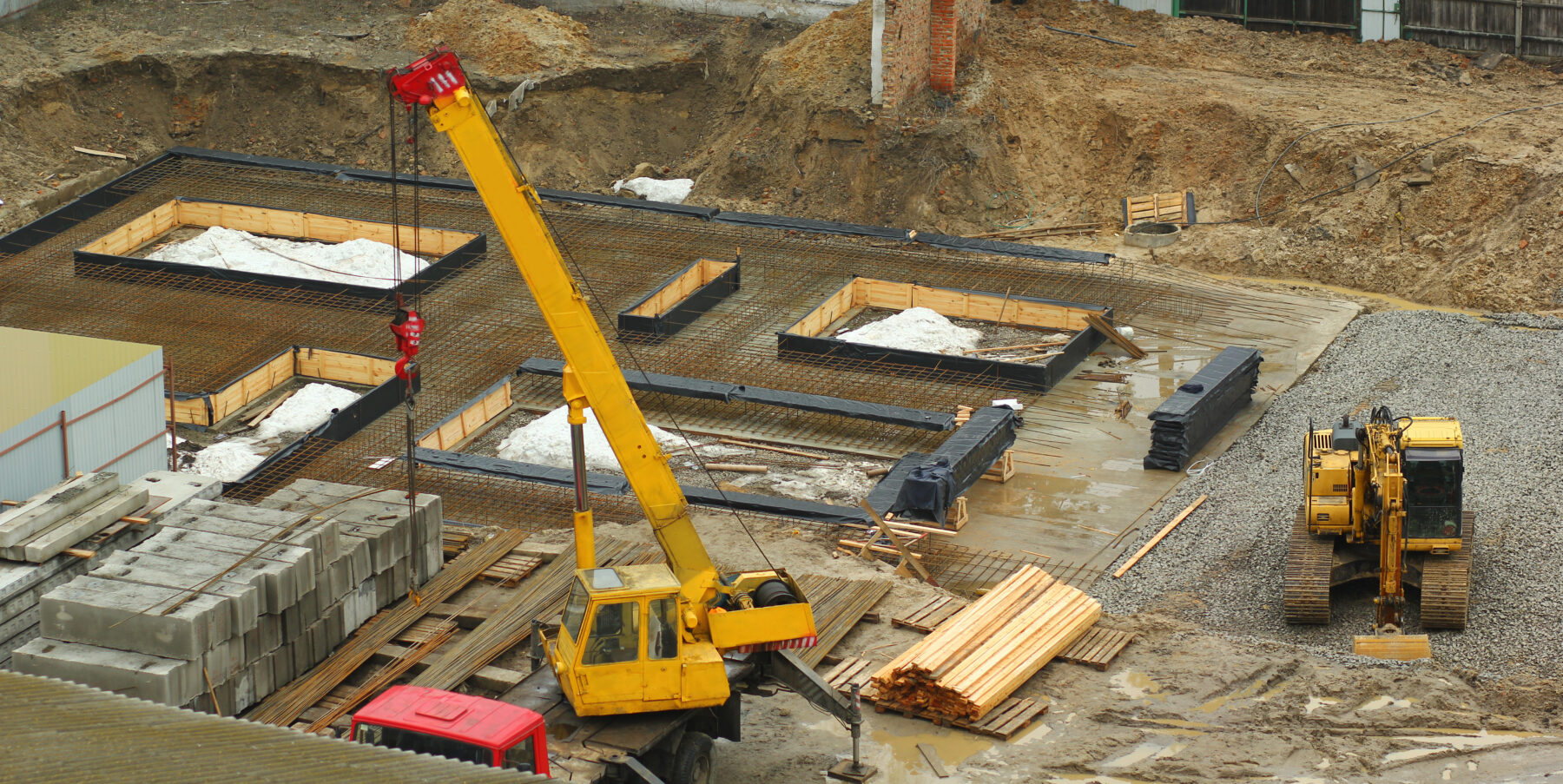

Gravel for Equipment Pads: What to Use and Why It Matters for Stability
May 20, 2026
Heavy machinery places concentrated downward forces that focus at every contact point between the frame and the surface below. A purpose-built aggregate pad spreads those forces across a wider footprint and carries them into bearing soils so equipment stays level through repeated duty cycles. Gravel built into that pad, placed and compacted with intention, turns variable subgrade into a working platform that keeps elevation steady under real operational pressure. The correct aggregate specification sets the trajectory for how that platform carries load through seasons, moisture movement, and repeated use.
Why Aggregate Shape and Gradation Drive Pad Stability
Under vertical pressure, angular crushed stone behaves differently than rounded river gravel because each fractured face locks against its neighbor instead of rolling away. That interlock keeps a compacted lift carrying point loads from generator skids, transformer frames, or crane outriggers without particles migrating outward. Rounded material behaves more like ball bearings under the same load, which is why river-run gravel rarely earns a spec on a load-bearing pad.
Gradation matters just as much as particle shape. A dense-graded mix carries stones ranging from the top size down through fine material that fills the spaces between larger rocks, creating a tight matrix with very little void space. That packed structure resists displacement when equipment vibration or repeated loading cycles try to push particles apart.
The Aggregate Grades That Hold Up Under Equipment Loads
Three-quarter-inch minus crushed stone, often referenced as CA-6, Class 5, or dense-graded base depending on the region, sits as the working standard for equipment pads across the aggregates industry. The top-size limit keeps the surface workable while the fines, typically around eight to twelve percent passing the number two hundred sieve, give the mix its internal density after compaction.
Between regional quarries, crushed limestone and crushed granite both carry equipment loads when the gradation checks out, and local supply often decides which product goes under the machine. Where drainage needs to move faster, a clean three-quarter-inch crushed stone with minimal fines sits as a capping lift above the dense-graded base, giving water a path to exit while still carrying the load above. That two-layer approach shows up frequently under outdoor generator pads and transformer bays.
Subgrade Work Before the Aggregate Arrives
Preparation under the aggregate carries as much weight as the material itself. Organic topsoil holds moisture and compresses under load, so stripping it down to firm native subgrade is the first physical step before any stone goes in. A woven geotextile separator laid across the prepared subgrade keeps the fines in the aggregate base from migrating downward into softer soils during wet cycles, which holds the pad thickness intact across multiple seasons.
Once the subgrade sits firm and the separator lies flat, placement happens in controlled lifts, generally six to eight inches loose before compaction, so the roller or plate compactor can drive energy all the way through the layer. Dumping twelve inches at once leaves the bottom of the pile less compacted, and that softer zone becomes the exact place where settlement starts once machinery arrives. Each lift gets compacted to a target density, often ninety-five percent of a modified Proctor value, before the next lift goes down.
Drainage, Frost, and the Conditions the Pad Must Manage
Moisture movement through and around the pad shapes how the structure behaves season after season. Crowning the finished surface at roughly two percent sheds rain and snowmelt toward the edges rather than letting water pool against equipment frames. Around the perimeter, a French drain or aggregate trench tied into site drainage carries that water away before it reaches subgrade soils.
In northern climates, frost penetration places its own demand on pad thickness. Building the aggregate section down to local frost depth, or tying into a drainable base that releases water before it freezes, keeps heave from lifting equipment out of level during winter months. Well-graded crushed stone with controlled fines drains and drains again, releasing trapped water rather than holding it through a freeze cycle.
Matching Pad Thickness to the Equipment It Supports
Equipment weight and contact pressure set the depth of the aggregate section. A light mini-excavator parking pad often functions on six to eight inches of compacted dense-graded base, while a stationary generator or cooling tower calls for twelve to eighteen inches of aggregate built up in multiple lifts. Crane pads and heavy industrial skids can push that section past twenty-four inches, sometimes combined with a geogrid reinforcement layer to spread load further.
Because soil bearing capacity varies from site to site, local geotechnical input ties thickness to the actual conditions under the pad. A sandy loam with good drainage asks for a different build than a clay subgrade that softens under sustained moisture, and the aggregate section adjusts to bridge that weaker zone.
Correct aggregate gradation, thorough subgrade preparation, and compacted lifts give equipment pads the stable footing that keeps machinery running level through heavy duty cycles. United Companies can match gradation specs to site conditions, recommend the right geotextile pairing, and deliver tonnage on the placement schedule the project demands. Give us a call to size, spec, and supply the pad structure that keeps equipment grounded exactly where it should be.