
Concrete Pavers vs. Poured Slabs: Which Works Best for Shed Foundations
March 12, 2026
A shed places more structural demand on the ground beneath it than its size suggests. Once walls are framed and equipment is stored inside, weight begins transferring into the soil, and any weakness below grade shows up quickly in door misalignment, floor deflection, or visible cracking. The foundation choice determines how that load moves through the base layer and how the surface responds to moisture, seasonal expansion, and repeated use. Concrete pavers and poured slabs achieve that support through very different structural behavior.
How Concrete Pavers Distribute Load
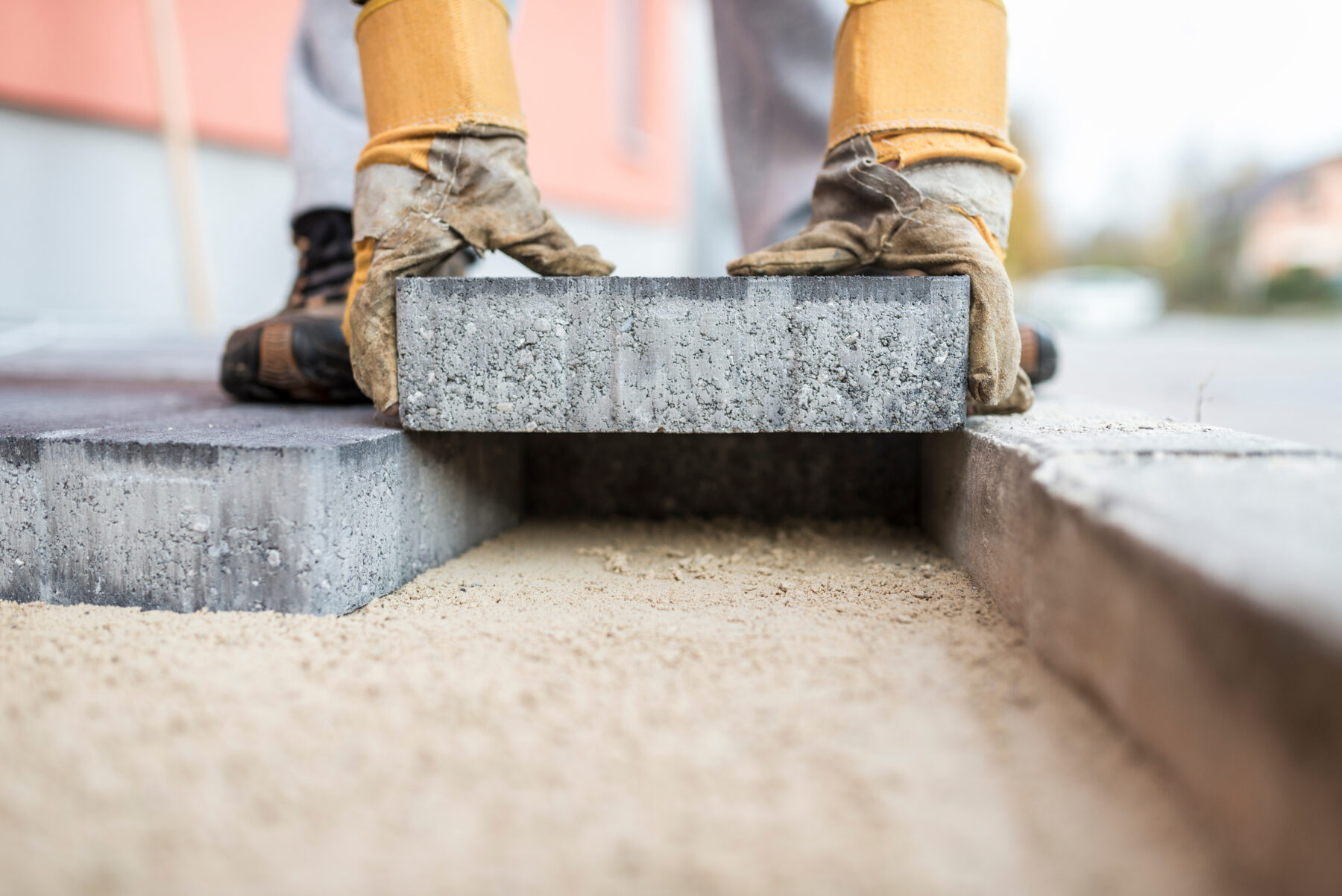
Segmented surfaces behave differently than continuous ones. Concrete pavers spread weight across individual units that interlock over a compacted aggregate base, allowing small shifts without transmitting stress across the entire surface. That flexibility begins below grade, where crushed stone is placed in lifts and compacted to uniform density before bedding sand and pavers are installed.
Water management is built into the system through joint spacing. Rainfall and surface runoff pass between pavers and move into the aggregate base, reducing hydrostatic pressure beneath the shed footprint. In regions exposed to freeze thaw cycles, that drainage path limits upward soil pressure that would otherwise disturb a rigid slab.
Base preparation determines how well this system performs. Each layer must be compacted to resist settlement under concentrated loads such as mower wheels or shelving supports. When properly installed, the interlocking surface maintains grade while accommodating minor soil movement without widespread cracking.
How Poured Slabs Handle Concentrated Weight
Continuous mass changes how loads move into the ground. A poured slab transfers weight evenly across its footprint, while reinforcement controls crack width as hydration progresses and shrinkage occurs. Welded wire mesh or rebar placement keeps fractures tight and distributed rather than allowing separation.
Thickness directly influences structural response. A four inch slab supports standard storage sheds, while thickened edges increase load bearing capacity where walls apply concentrated force. Subgrade compaction remains critical, since uneven density beneath the slab leads to differential settlement and visible cracking.
Curing conditions also affect surface behavior. Controlled moisture retention during early hydration reduces shrinkage stress and strengthens internal bond development. Once cured, the slab provides a solid platform suited for anchored framing, rolling equipment, and consistent point loading without joint displacement.
Soil Conditions and Movement Response
Expansive clay introduces measurable ground movement as moisture levels fluctuate. Modular paver systems tolerate that expansion and contraction by allowing individual units to adjust within joint sand. Movement remains localized rather than spreading across the entire surface.
Stable, well drained soils create favorable conditions for slab placement. Uniform compaction beneath the concrete supports even load transfer and minimizes stress concentrations. Where heavier sheds or workshop use introduce repeated equipment loading, the continuous slab distributes that force more directly into the subbase.
Drainage design further shapes performance. Sloped sites benefit from systems that permit infiltration through the surface layer, while flat pads require controlled grading and perimeter drainage to protect slab edges. Matching foundation type to actual soil behavior protects framing alignment above.
Installation Sequencing and Site Coordination
Compaction equipment, material staging, and access routes influence construction planning. Paver installations focus labor on excavation depth control, aggregate placement in lifts, and mechanical compaction before surface units are set. Once joint sand is swept and compacted, the foundation is ready to receive the shed structure.
Slab construction introduces forming, reinforcement layout, placement timing, and finishing operations within a defined window. Ready mix delivery requires the site to be fully prepared before discharge begins. After finishing, hydration progresses over several days before heavy loads are applied.
Each approach carries different coordination demands. Pavers emphasize precision in grading and compaction, while slabs concentrate effort into placement accuracy and curing control. The chosen system should align with site access, crew availability, and project timeline.
Choosing the Right System for the Application
Intended shed use shapes foundation requirements. Light storage structures placed on well drained ground perform well on a properly compacted paver base, where segmented support manages surface water while maintaining level bearing. The flexibility within the system absorbs minor soil shifts without structural disruption.
Heavier sheds functioning as workshops benefit from the rigidity of reinforced concrete. Increased slab thickness at perimeter edges and controlled reinforcement spacing create resistance to concentrated wheel loads and anchored equipment. A dense, well prepared aggregate base beneath the slab prevents settlement that would otherwise translate into surface cracking.
Every successful shed foundation begins below grade, where excavation depth, aggregate compaction, and moisture control determine how the surface responds once weight is applied. Working with a knowledgeable supplier brings clarity to mix selection, base material specification, and placement strategy. When the base is built correctly, framing above remains square, doors operate smoothly, and the structure maintains alignment under repeated loading cycles.