

Environmental Snapshot: Preventing Large Animal Vehicle Strikes
June 24, 2026
Treat wildlife zones with the same caution and respect as you would when driving through a construction zone. Not only is this the law, but it can be a matter of life and death for you, your family, other motorists, and wildlife.
Large Animal Strike Prevention: Small Habits, Big Impact
Large animal collisions can be sudden and dangerous-often happening in low visibility, at night, or when drivers are distracted. The good news: many risk factors are controllable. Here are four practical steps drivers can take to reduce the chances of a large animal strike.
Slow Down
Slow down especially in areas where deer and elk are active. When a vehicle hits wildlife, the damage isn’t just about what you hit, but how fast you’re going. In layman’s terms, kinetic energy increases quickly as speed increases-so even a modest jump in speed can make a crash far more severe. That extra energy can mean more impact force on your vehicle, greater intrusion into the cabin, and a higher risk of serious injury or death for occupants. Protect yourself, your passengers, and wildlife by driving at a speed where you can react in time — especially at dawn, dusk, and during seasonal migrations.
Avoid Fatigue on Every Trip
Drowsiness slows reaction time and impairs judgment. If your eyelids start to feel heavy or you notice signs of fatigue, make it a rule to take a break before it becomes a safety risk. If possible, switch drivers and stop in a safe location to rest. Even a short nap can help you recharge and get back on the road safely.
Put the Phone Away
Any attention taken from the road increases risk. Use “Do Not Disturb” and handle navigation or music before driving. Avoid texting, browsing, or checking messages — especially at night or on rural roads. Stay fully focused at dawn, dusk, and night. Many animals ( deer, elk, moose, etc.) are most active around sunrise, sunset, and in darkness. During these times, reduce distractions, increase following distance, and scan the roadside and tree line for movement.
Look Farther Ahead and Watch the Shoulders
Animals often appear suddenly after others-especially in groups. Keep your eyes moving from the roadway to the shoulder to the ditch/edges. If you see one animal, assume more may follow.
Small choices behind the wheel can prevent a life-changing event. Drive alert to give wildlife — and yourself — every possible advantage.
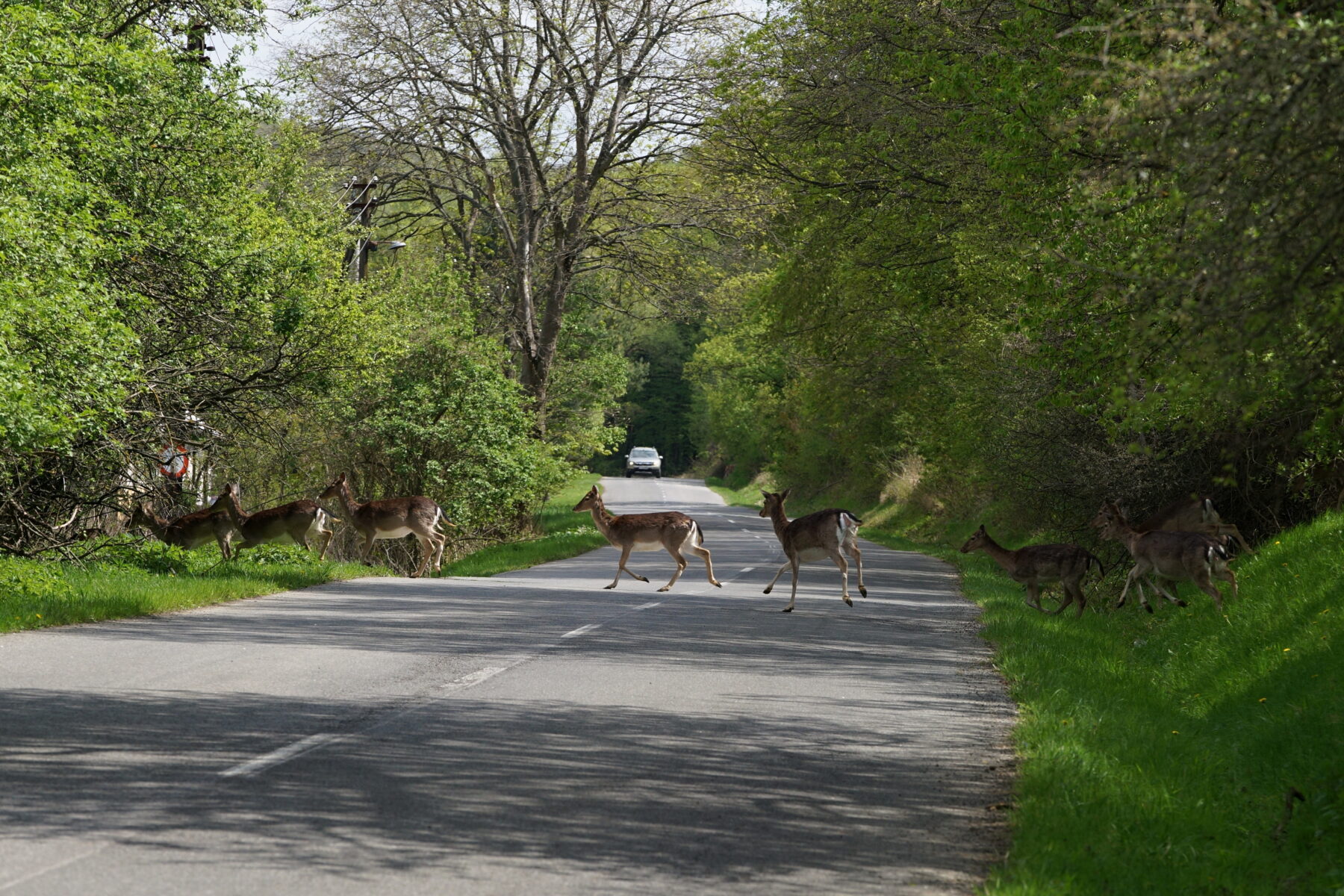
Best Ways to Prevent Collisions
- Stay alert during peak times: Be alert during dawn/dusk and high-risk seasons such as fall rut, spring dispersal and winter migration.
- Adjust speed for wildlife risk: Slow down near wildlife warning signs and in low-light to reduce stopping distance and impact energy.
- Use headlights properly: Use high beams when safe/legal; dim for oncoming traffic.
- Scan the roadside: Check shoulders/ditches/road edges for movement and groups of eyes.
- Reacting to an animal in your lane: Don’t swerve at high speed; brake firmly and stay in your lane.
- Improve visibility and parking safety: Keep windshield/windows clean and washer fluid topped up; if stopping, get out of traffic and use hazards.
- Leverage driver-assist technology: Use systems like adaptive cruise + automatic emergency braking and animal-detection alerts (if available).
- Increase space around you: Maintain a longer following distance in collision-prone areas for extra reaction time.
By the Rockies South Environmental Team, with major contributions from Gene Bollig.
Internet Explorer is no longer supported.
Please use a different browser like Edge, Chrome or Firefox to enjoy a full web experience.
It's easy to make the switch.
Enjoy better browsing and increased security.