

Environmental Snapshot: Living with Large Predators Around the Workplace
April 2, 2026
Living and working at a gravel pit in the Colorado Rockies means doing your job where wildlife also lives. Large predators and opportunistic carnivores may pass through equipment yards, stockpiles or perimeter roads. With awareness, sensible behavior, and a few practical changes to how you store food, manage trash and secure equipment, you can reduce risk to people and property while coexisting with the animals around you.
Defining Habituation and How to Avoid It
Habituation is a behavioral change in which an animal loses its natural fear of humans after repeated, non-threatening exposure. In wildlife management it commonly means animals tolerate or approach people instead of avoiding them.
Why Is It Important?
Habituated animals are more likely to approach people, camps, pets, livestock and roads – increasing risk of attacks, property damage, vehicle collisions, disease transmission and ultimately legal removal or lethal control. Habituation can change ecological roles (e.g., predators becoming nightly visitors to farms) and create unsafe working or living conditions.
Short action checklist (for staff or residents):
• Never feed wildlife; educate visitors.
• Secure food, garbage, pet food and livestock feed nightly.
• Remove carcasses/offal immediately and properly.
• Keep pets leashed or indoors; supervise children.
• Use consistent hazing the moment an animal approaches humans or human structures.
• Install/maintain wildlife-resistant containers, fencing and cameras.
• Report and document unusual or repeated activity to wildlife authorities.
Predators You May Encounter
Black Bear — The most common large bear in Colorado. Bold around food and camps.
Mountain Lion (cougar) — Secretive, typically avoids people but can stalk prey around dawn/dusk.
Gray Wolf — Rare historically, but recolonization / reintroduction efforts mean wolves may appear in parts of Colorado; pack behavior is different from solitary predators.
Coyote — Common; smaller but can be bold around pets, livestock and unattended food.
Bobcat — Smaller predator that rarely threatens people but can prey on small livestock or pets.
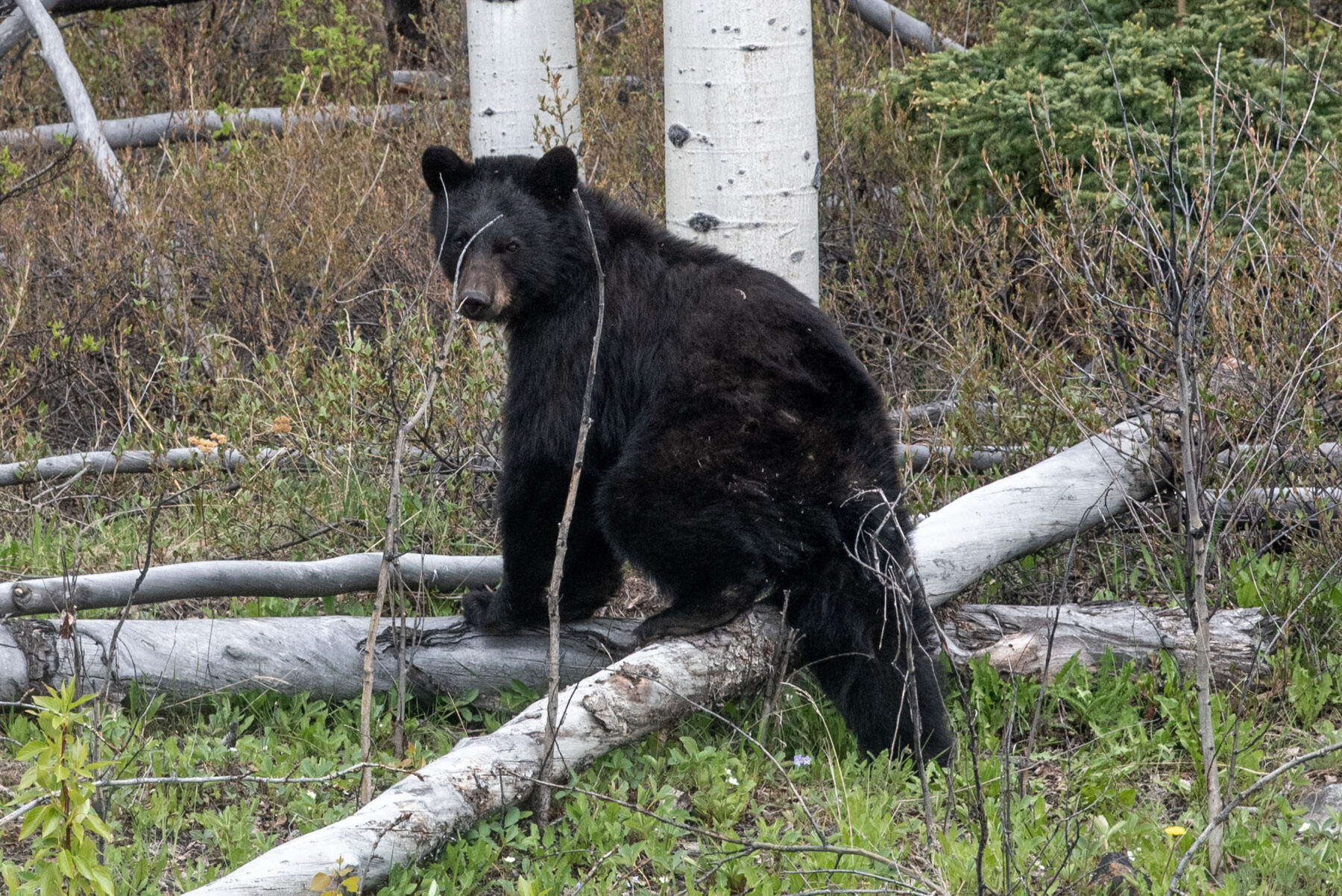 Encounter With a Bear
Back away slowly; never run. If charged, use bear spray. If a bear makes contact, responses differ by bear behavior—use bear spray and defend yourself; consult local guidance for nuances.
- Special Note: During hyperphagia (late summer-fall) bears intensely forage to build fat, become bolder and travel farther, and are more likely to enter campsites, roadsides, and neighborhoods — increasing the chance of dangerous encounters as they focus on food and tolerate closer human proximity.
Encounters with Wolves/Coyotes
Wild wolf encounters are rare. Wolves and coyotes are usually wary of people, but habituated or food-conditioned individuals may approach campsites, livestock, or pets. Habituated wolves may approach, stay calm, keep children and pets close, make yourself look big and back away slowly (don’t run); if it approaches, shout, use deterrents or bear spray, and report it to authorities.
Encounters with Mountain Lions
Mountain lion encounters are rare. These cats usually avoid people but are most active at dawn and dusk and may target hikers, mountain bikers, even individuals on horse back, small children or pets. If you see one, stay calm, pick up children, make yourself look big, maintain eye contact, speak firmly, and back away slowly—do not run or turn your back. If it behaves aggressively or attacks, fight back with anything available (aim for the face and eyes), use bear spray if you have it, and report the sighting to local authorities.
By the Rockies South Environmental Team, with major contributions from Gene Bollig, and research provided by the team.
Internet Explorer is no longer supported.
Please use a different browser like Edge, Chrome or Firefox to enjoy a full web experience.
It's easy to make the switch.
Enjoy better browsing and increased security.